
What Happens After the Show?
What might change if we learned to share the world as consciously and compassionately as we sometimes share a room?
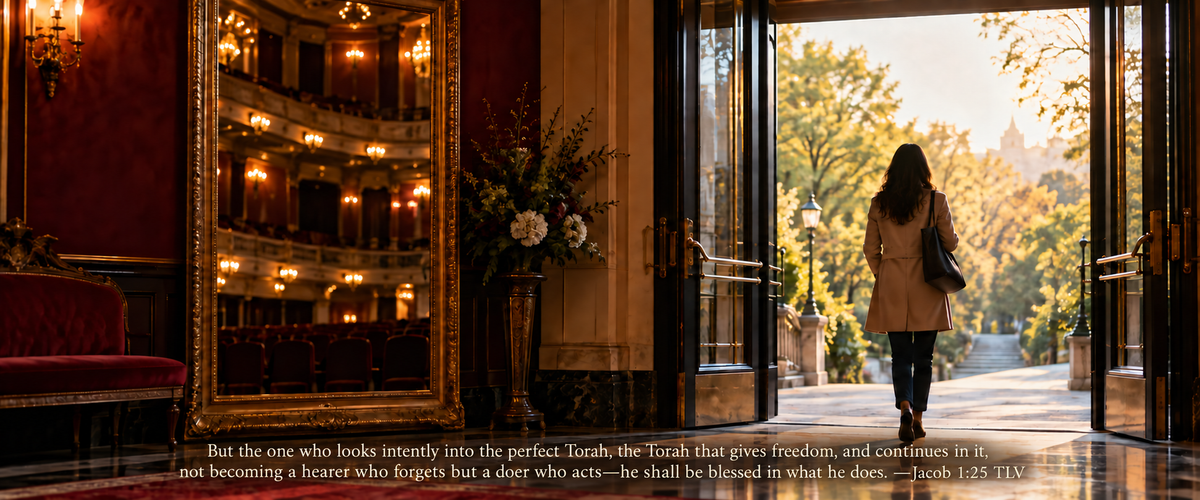
None of us knows how long we have, Dear Loved Ones. Only God knows that.
The space and time we share in any given room are temporary—fleeting, even. Yet we continue creating environments everywhere we go.
In our homes and our schools. In our congregations and workplaces. In the stores and restaurants we frequent. In online spaces, and even within our own minds.
Wherever we walk, drive, gather, or play—and throughout all the ordinary spaces in between—we help shape communities and conversations.
Can we sense the flap of the butterfly’s wings, the falling dominoes, or the ever-expanding ripple?
What Do We Take Away From the Event?
We still affect people without necessarily realizing what our presence awakens or suppresses within others—or what it makes possible in the environments we share.
So where does that leave us after the laughter fades, the lights come on, and the audience disperses—in clusters, as couples, or one by one?
While the event might have ended, we do not leave empty-handed. We carry memories, questions, assumptions, wounds, encouragement, and perhaps a little more awareness of one another than we possessed when we entered.
How, and what, do we integrate moving forward?
The room and experience may have been temporary, but what we bring forward into the next scene of our lives carries weight.
Do we become more cognizant of the ripples we witness, create, carry, cross—or become caught within?
Although our lives here on Earth are brief and impermanent, what we leave behind may continue long after we have left a room—or even this life.
What Do We Carry Into the World Beyond the Room?
What do we integrate moving forward—and how?
Perhaps every room we enter gives us another opportunity to practice sharing the world more faithfully—while becoming more conscious of what kind of world our presence is helping to create.
In other words:
What will we choose to bring into each room—and what will others be able to carry forward because we were there?
Sometime in middle or high school, I created a poster centered around the words Be the Inspiration. It was inspired by a familiar saying I think most of us will recognize:
Be the change you wish to see in the world.
Although those precise words are frequently attributed to Mahatma Gandhi, I have not found evidence that he ever used them. They do, however, echo a longer reflection he wrote that begins, “We but mirror the world.”
Both the fuller passage and the familiar saying it may have helped inspire suggest something important, though: we need not wait for someone else to begin.
Transformation does not require us to ignore injustice, excuse harmful behavior, or stop asking others to accept responsibility. But if we want to witness change in the world, we must also become willing to examine what our own thoughts, choices, and actions are contributing to it.
Yet the invitation to become part of the change we hope to witness did not begin with Gandhi—or with the poster I created years ago.
Throughout the Tanakh, Adonai calls His people to embody His character within the world they share: to love their neighbors and the outsider, practice justice, love mercy, walk humbly, feed the hungry, shelter the vulnerable, and loosen the bonds of oppression.
Through Isaiah, Adonai promised that when His people lived this kind of faithful compassion, their light would break forth like the dawn.
So when Yeshua later told His followers, “You are the light of the world,” He was not introducing us to a kinder God than the One revealed before Him. He was embodying—and calling us to exemplify—the compassionate, truthful, merciful, and just character of the Father who does not change.
The same Adonai who commanded Israel to love the stranger later sent Yeshua to show us what that love looks like when it enters a room.
Scripture asks something deeper than merely becoming the change we wish to see, Dear Loved Ones. It asks whether we are willing to be transformed by Adonai—and then carry His character into the world we share.
A Lived Practice
As we explored in the article about how we behave in traffic, we can intentionally adjust what we contribute to the environments we share. That article also includes Darren Huckey’s insightful story about a rabbi who longed to change the world—only to discover that meaningful change begins when we start with ourselves.
Personal transformation is powerful and can encourage others to become more conscious of their own impact. Each room we enter might offer us another opportunity to practice sharing the world more faithfully. After all, Dear Loved Ones, ripples start small and expand outward.
While the responsibility to practice lovingkindness is shared, the way we each choose to embody and incorporate it remains personal.
A single interaction may not transform society,
but we also do not know for certain that it can't.
If we want to witness transformation in the world, we must first be willing to start with ourselves—with our own individual thoughts and actions. That does not mean we stop asking or encouraging others to change—especially when healthy relationships require honesty and accountability. It means recognizing that a faithfully lived example may reach someone in ways our requests or demands cannot.
What Travels Beyond the Room?
If culture is partly formed by all the rooms we repeatedly create for one another, perhaps we can become more curious, conscious, and purposeful about what we contribute—and more willing to let Adonai transform what we bring into each situation, room, or environment we enter.
We cannot choose what another person will experience, integrate, or carry forward. Nor can we redeem humanity, manufacture unity, or establish God’s Kingdom ourselves.
We can, however, ask Adonai to help us grow and show us how our presence might prepare the way—how we might participate faithfully in making room for truth, compassion, repentance, courage, and love.
Scripture has always called us to manifest and reflect the light and love of Adonai’s character outward. God makes all things possible—including our transformation—but we must decide whether we are willing to take the next faithful step.
Perhaps, when we change even one habitual way we move through the world, Dear Loved Ones, we purposefully place a stone in the water.
The ripple may begin small. But each faithful choice can help prepare the way for a world increasingly receptive to Adonai’s presence—and more reflective of His character.
How we listen, respond, include or exclude, challenge, forgive, set boundaries, grant or withhold permission, expose or conceal our blind spots, speak truth... or remain curious and faithful becomes part of the world we continually create.
What might change if every room we entered became part of that preparation?


Comments ()