
What Shapes an Experience?
How audiences transform the rooms—and experiences—we share.
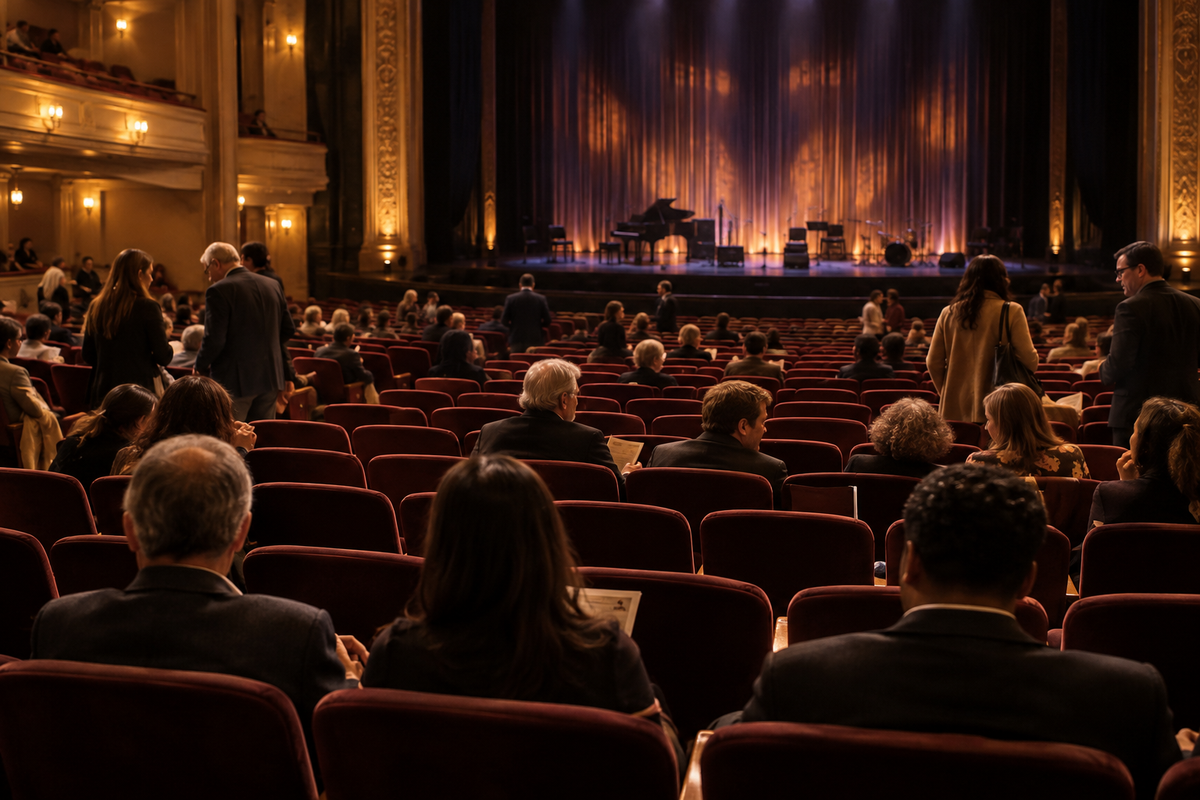
How much of an experience is created by what happens before us—and how much by those experiencing it beside us?
Just as any performer helps create the room—so does every person receiving the performance.
The Same Performance, a Different Experience.
Have you ever tried to recapture a moment, relive an experience, or share it with someone else, Dear Loved Ones—only to be disappointed?
This happened to me in the most interesting way. Twice. Once with a stage performance of Menopause: The Musical, and the other with the movie It’s Complicated.
A stage performance can naturally vary from one showing to another. A movie, however, is fixed and unchanging.
Yet in both cases, the audience surrounding us transformed the experience.
My husband's mother wanted to see Menopause when it came to our local area, as well as It’s Complicated in theaters, as a girls’ night. Although I wanted my hubby to come too, I respected her wishes both times and went with the ladies.
The Musical
Interestingly, Dear Loved Ones, our first article in this comedic series began at the Chandler Center for the Arts, and this one brings us to the historic Clemens Center—which I'm pretty sure was filled to capacity.
The room was alive.
Bursting with activity, people, excitement, and anticipation. Even as we took our seats and the lights dimmed, there was an energy in the air that was stimulating. Electric. Perhaps a bit communal and even a tad mischievous.
There was a permissiveness to laugh loudly. Boisterously. To respond openly and join in with the fun. Unashamed and free.
It was as if there was an invitation the audience extended to one another without ever needing to say a word. Pretty incredible really, looking back.
When I later returned with my hubaliscious, the performance was just as spectacular, but our experience was nothing like mine was with the girls...
The Movie
When the movie came out and Robert's mom wanted to do ladies night again, I insisted that he come too. Once again, though, she said no and I begrudgingly respected her wishes.
The anticipation in the air was once again palpable.
Just as before, I had no idea what I was in for. I knew nothing of either the musical or the movie before arrival. Everyone else, though, seemed alive with expectations.
Just as before, people laughed enthusiastically. Hysterically even—freely, loudly, unabashedly. Once again, a roomful of separate people became something shared, each response adding energy to the next.
The movie was so funny that hubby and I later went to see it together.
Same film.
Same performances.
Same jokes.
Completely different experience.
Each time, the first audience filled the room with laughter that seemed to lower inhibitions and grant everyone else permission to laugh too.
Once again, the second audience was quieter. More reserved. Still almost. Moments that had nearly shaken the first room from laughter passed with little to no response.
The movie had not changed.
But the room had.
And because the room changed, the experience I had with the ladies wasn't what we shared as a couple. It made me wonder whether an audience ever merely receives a performance.
Or whether, together, we help create the experience everyone carries away.
Who Are We When We Laugh Together?
Each time, there were men and women in the audience—that is, for all four performances. The difference was not who was present—or whether I attended with women or with my favorite and beloved human.
The difference was the energy each audience created together.
Everyone was laughing during both ladies’ nights—my first experience of each performance—but not during either of the nights out with my hubaliscious.
While a live performance can have subtle or even drastic differences, a film is unchanging. Every frame, line, pause, and performance remains fixed.
In the first room, laughter invited more laughter.
In the second, silence encouraged more silence.
We didn’t laugh as hard or as often as I expected. Not because the performance had become less funny in either case, but because our laughter felt more exposed.
Each time, the audience in my second viewing was much, MUCH more ... mellow. Lol let's go with mellow. Reserved perhaps, but drastically different from, even opposing to my first experience. One I had hoped to share with my hubby.
Neither of us had as much fun as I think we could have with the first audience.
We hardly laughed at all because the silence was not just awkward, it was deafening. The experiences—for me—were like night and day.
My schnuckums left both the performance and the movie wondering what I had been so eager about and why I wanted to share it with him.
Although it was disappointing—especially because we rarely went out—could it be that the room—aka audience—offered a different invitation?
While contemplating our humanity, Dear Loved Ones, I cannot help but wonder: If laughter and love are both said to 'be the best medicine' to help heal us, might they sometimes work hand in hand?
Both times, the first rooms invited laughter. Each second audience invited awareness of just how much—even how quickly—we absorb one another’s permission—or, in this case, hesitation.
I've always been interested in how profoundly we shape—and are shaped by—one another. I believe in nature and nurture, and I feel this isn't that much different.
Our experiences may be more than moments we live through.
They might also become moments that teach us.
Moments that lead us.
Moments like these invite me to wonder: What do we unknowingly awaken or suppress in one another? How do our energies intermingle?
How might a sense of belonging and encouragement welcome us to participate?
Compare that to a sense of uncertainty that might cause us to hesitate, become more self-conscious, hold ourselves back, or possibly even retreat.
If we shape one another so profoundly without consciously intending to, Dear Loved Ones,
what are we inviting from—and offering to—the people who share a room with us?
Does laughter create an opening through which Adonai’s love can work—drawing us toward connection and helping us recognize one another more fully?
How does God's love move through our interactions, and are we being present enough to notice just how powerfully and profoundly we affect one another?
The question no longer seems to ask whether or not an audience can help create, influence, or alter an experience, but rather: Are we conscious of what we contribute and how we ourselves are being affected?
Additionally, how much of what we feel free to express depends upon whether the people around us appear to grant us permission, and how much depends on our expectations?
Had the first audiences entered already expecting to laugh freely?
Did their anticipation help create the permission I felt?
Did Robert’s expectations—shaped partly by my enthusiasm—make the quieter experiences feel even more disappointing?
And was I trying not merely to share the same performance, but to recreate a moment that could never unfold exactly the same way twice?
Perhaps neither laughter nor silence tells the whole story.
A lively room is not automatically loving, just as a quiet room is not necessarily unwelcoming. Laughter can connect us—but it can also exclude. Silence can restrain us—but it can also make room for listening, contemplation, or something we might otherwise miss.
Perhaps the invitation is not to manufacture a particular energy, but to become more attentive—to Adonai, to one another, and to what our presence—in heart and mind—might make possible.
We may never fully know what our laughter, silence, openness, hesitation, encouragement, or restraint awakens in another person.
But we can ask Adonai to help us notice.
To help us recognize when someone needs permission to participate, space to remain quiet, encouragement to express themselves, or simply the assurance that they are not alone.
Because an audience does not merely receive an experience.
Together, we help shape it.
So perhaps the question is not only, What kind of experience am I entering?
But, Dear Loved Ones:
What kind of experience is my presence helping to create?


Comments ()