
Maybe all a comedian is trying to do is restore our humanity.
What if—beneath the provocation, exaggeration, and sometimes cruelty—a comedian might also be asking us to look at something we would rather avoid in order to create change?
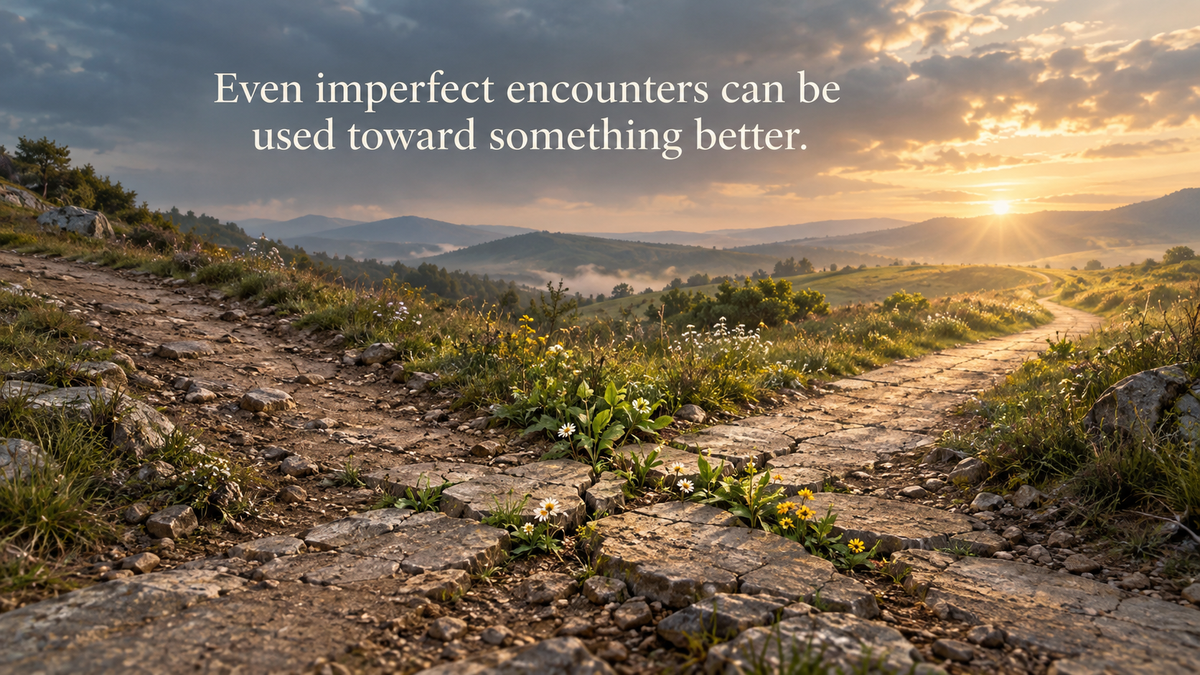
Perhaps that gives comedians far too much credit.
Maybe they’re really only trying to fill seats, make us laugh, earn a living, and ultimately just live their life. Then again... maybe they really are trying to make us uncomfortable.
Perhaps in an effort to make us think about some important things. Or perhaps, to distract us from all that crap, even for just an hour or two.
But sitting in a room full of strangers, laughing together at things we might never otherwise discuss, I began to wonder whether those possibilities are really so separate.
In November 2023, we went to Las Vegas to see Daniel Tosh and I nearly made us late because I wanted whipped hand soap. It's creamy and leaves my hands feeling happy rather than dry, sad, and hurting.
We were leaving the following day. Nectar would be closed by the time the show ended. Apparently my priorities demanded one last stop. 🫣 😇
We made it. Phew! 😅 😂
The room itself was relatively simple—sleek and clean. Something between a movie theater and a high-school auditorium. It was full, but not packed.
And when Tosh took the stage, I noticed something I hadn’t expected…
From where I sat, Tosh appeared to be in considerable pain—perhaps not something most would notice, but as a massage therapist and observant person, I couldn’t help but take note.
Before considering what a comedian may be asking of our humanity, perhaps we should remember the comedian is human too.
What happens when a comedian gathers a roomful of strangers, names the things we are afraid to discuss, and somehow gets us to acknowledge our shared humanity?
I knew Daniel Tosh for his brazenness. He seemed willing to speak—and make jokes—about uncomfortable subjects, societal taboos, and sources of extreme pride or extreme shame.
That night, his material moved through slavery, political and religious attitudes, unabashed nationalism, abortion, entitlement, and so much more.
Of course I did not necessarily like, enjoy, or agree with everything he said—and I doubt everyone else did either. But challenging our perceptions and perspectives is one place where growth becomes possible.
Honestly, I wish I could embody and embrace my inner comedian—speak my truth and put it all out there with such bold and unapologetic confidence.
In truth, though, I’m not sure I could ever allow myself to do what they do. In part because I think and feel so many ways about nearly everything!
Not to mention all the wonderful ripples, rabbit holes, and squirrels surrounding any given topic—let alone the many possible considerations and circumstances that might affect how we each understand, relate to, or experience something.
But while I am open and honest, I am reserved. Conversational but contemplative.
Even though I can be outgoing and readily converse with strangers, I can also be shy and withdrawn. I’ve been told I’m a social introvert—an interesting combination of socially outgoing and inwardly cautious.
That caution, combined with uncertainty about myself, my surroundings, other people, and how my words might be felt or received, often feeds my desire to prevent every possible misunderstanding.
And so, I endlessly contort myself in hopes of causing the least harm possible.
And I’m mostly okay with that…
But what if, Dear Loved Ones, making room for challenging conversations helps us connect with and learn from one another—perhaps even inviting us to grow together as individuals as well as a collective whole?
Can uncomfortable encounters become ground for growth?
While a comedian may awaken, challenge, expose, remind, or reconnect us—perhaps restore gives the comedian too much credit.
After all, a comedian cannot restore our humanity—not in its deepest sense.
We bear responsibility for how we respond, how we grow, and how we treat one another. But the transformation of a person is not a performance we accomplish alone. With the love, guidance, and support of Adonai, true restoration—of our souls and of who we are—becomes possible.
That deepest work belongs to Him.
Perhaps, then, a comedian’s work can become a gift—an interruption long enough to remind us of the humanity Adonai created us to share.
Perhaps laughter can loosen our grip on certainty.
Perhaps discomfort can reveal something we would rather leave hidden.
Perhaps, for a moment, the stranger laughing beside us becomes more than a stranger.
Not because the comedian has redeemed the room, but because Adonai can use even the most imperfect people, difficult circumstances, and uncomfortable moments to help us notice what we have been unwilling—or unable—to see.
Of course, making people uncomfortable is not automatically virtuous just because it reveals truths.
Neither is causing offense.
Words can reveal what is hidden—but they can also wound.
Humor can confront power—but it can also reinforce cruelty.
Laughter can connect a room—but it can also isolate the person being laughed at.
Boldness alone is not righteousness.
Righteousness can be bold, but boldness is not always righteous.
Truth can be uncomfortable—even offensive—but offense alone does not make something true.
Wisdom can grow through suffering, but cruelty does not become wisdom merely because people laugh.
Perhaps the question is not simply whether a joke provokes us, but what it welcomes us to witness, how it might enlighten us, and what kind of fruit it helps produce afterward.
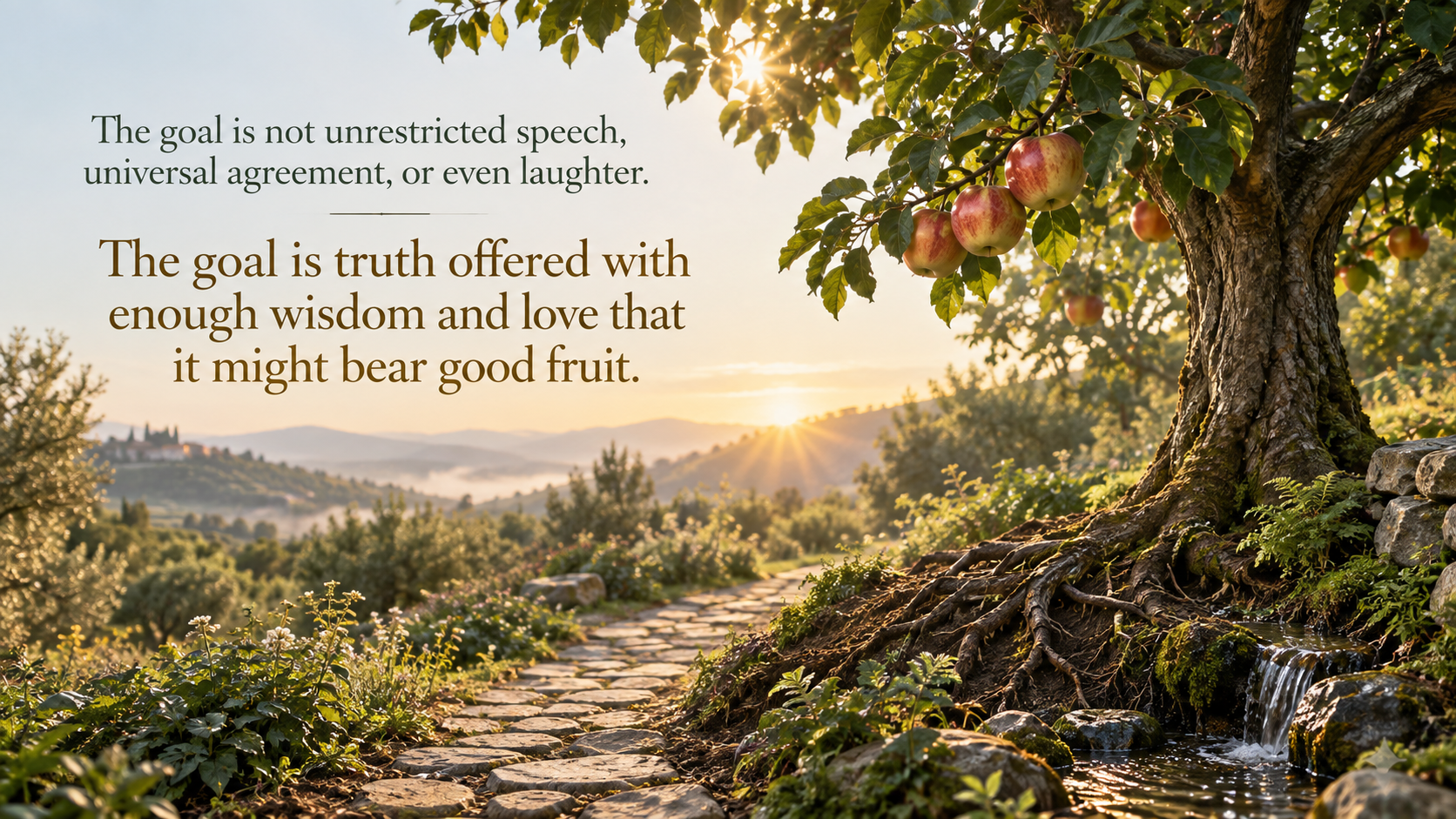
I want to speak truth, Dear Loved Ones, but I also want my words to serve love.
I do not merely want the courage to say whatever I think. I want the wisdom to know what is worth saying, the humility to know I may be wrong, and the compassion to consider what my words might produce.
This is me. Sharing. Expressing. Being vulnerable with you.
Trusting—and perhaps stupidly so. Like any optimistic, innocent dumb-dumb who believes, against all odds, in humanity—and hopes something I share might help point a soul toward the One who saves.
Why do this?
Because I hope it connects us.
I hope it helps someone.
Heck. I hope it helps me. Lol.
But seriously — and truly — because I believe in belief.
I believe in love. I believe in you. I believe in us. I believe in Adonai. I believe in possibility. And I am learning how to believe in me.
Perhaps that is part of what I admire about comedians: their willingness to offer something of themselves to a roomful of strangers without knowing exactly how it will be received, and doing it anyway.
They risk being misunderstood.
They risk offending.
They risk failing to make us laugh.
And still, they step onto the stage.
I cannot know what every comedian intends to give or hopes to achieve, let alone what every audience member might receive.
Regardless, though, I hope that whatever is given, whatever is received, and whatever conversations follow might spread a little more kindness, awareness, and love throughout our shared humanity. Our experiences are deeply individual and subjective, yet our lives remain intertwined, overlapping, and connected.
Perhaps a comedian cannot restore our humanity, Dear Loved Ones.
Adonai alone performs the deepest restoration—but imperfect human encounters may still awaken our attention, exercise our discernment, and confront us with what we will choose to carry forward.
We all have choices to make regarding the doors we open and we each decide if, when, and how we walk through them.
So let me leave you with this one last question (for now):
What will you choose to carry into the next room?


Comments ()