
Leadership Principles From DC-Vertigo’s Constantine: 2026 Edition
What a single exorcism scene in Constantine teaches about misjudging problems, adapting fast, and leading through a crisis.
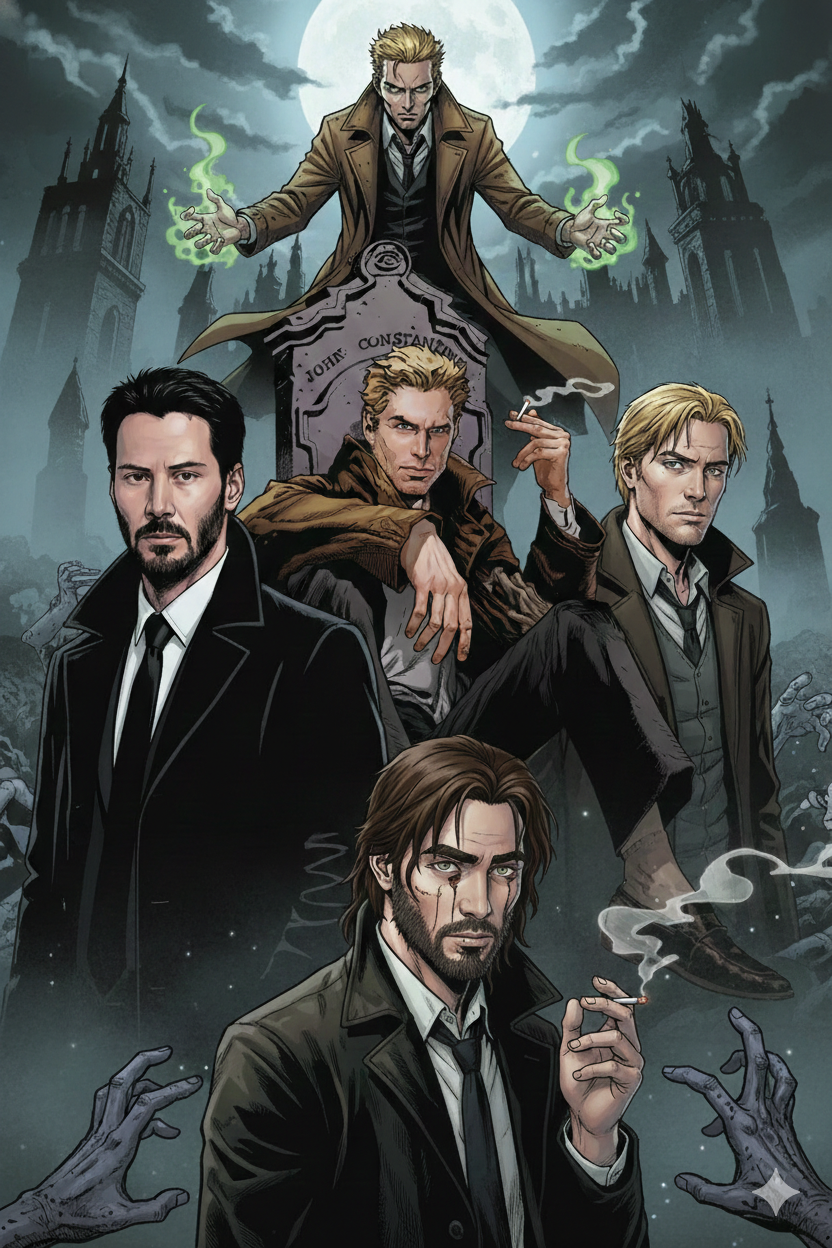
Originally Published: Aug 23, 2024 | Updated: November 2026
If you haven’t watched Constantine yet, I’d highly recommend it. Really, stop reading and go watch it. I’ll wait. :-)
On the surface it’s a supernatural thriller about a chain-smoking exorcist who walks the line between Heaven and Hell. Watch it a second time, though, and you’ll see something else. John Constantine is a case study in how leaders size up a problem, how they adjust when they get it wrong, and how they lead people through a crisis.
This is the first in what I hope becomes a series on leadership lessons from comics and graphic novels. We’ll start with a single scene: the exorcism near the beginning of the film.
Happy reading.
1. Initial Nonchalance and Misjudgment
Constantine shows up at a house where a young girl is possessed, and he treats it like routine work. He keeps his cigarette lit and moves at an unhurried pace, like a man who has done this a hundred times and expects to be home soon.
For him, it probably is routine. That’s exactly the danger. Experience is one of a leader’s greatest assets, but it can also become a blind spot. When we’ve seen a hundred versions of a problem, we tend to file the hundred-and-first under “familiar” before we’ve really looked at it.
In my own field, IT, this happens all the time. A ticket comes in that looks like a password lockout, or a slow network, or a printer acting up. Nine times out of ten, that’s all it is. The tenth time, it’s the first visible sign of a security incident. A leader who triages on autopilot will miss it.
The lesson: Experience should speed up your assessment. It shouldn’t replace it. Guard against complacency, especially on the problems you think you already understand.
2. Shift to Urgency
Constantine does still run his process. He goes through the motions, holding up different symbols to see how the demon reacts. That methodical work is what saves him. It surfaces the truth: this isn’t an ordinary possession. A soldier demon is trying to force its way across to our side, which shouldn’t be possible.
His demeanor changes on the spot. The casual air is gone, replaced by focus and urgency.
Two things are worth noting here. First, his discipline caught the problem even though his attitude didn’t. Good processes protect us from our own assumptions. Second, once he had new information, he didn’t cling to his first read out of pride or habit. He changed course immediately.
The lesson: Build habits that test your assumptions, and when the evidence says the situation is bigger than you thought, let your response grow to match it. Changing your approach isn’t a sign of weakness. It’s the job.
3. Effective Communication Under Pressure
As things escalate, Constantine’s communication changes as much as his body language. He stops chatting and starts directing: short, precise instructions, each one tied to something that has to happen right now.
When the pressure is on, people don’t have the bandwidth for long explanations or vague requests. They need to know three things: what to do, when to do it, and who is doing it. Clear communication in a crisis isn’t about being harsh. It’s about removing guesswork so people can act.
The lesson: In high-pressure moments, cut your message down to the essentials. Be specific, be brief, and make sure every instruction has an owner.
4. Decisive Action and Command
My favorite moment in the scene is Constantine’s exchange with Chaz, his young driver. Constantine tells him to move the car. Chaz asks why. Constantine doesn’t explain. He just repeats the order.
Moments later, the reason becomes obvious, and Chaz would have been very glad he’d listened. (No spoilers, but it involves gravity.)
In a crisis, a leader sometimes has to give a direction without stopping to defend it. Every second spent negotiating is a second not spent solving the problem. Decisiveness, even with incomplete information, is often what keeps a bad situation from getting worse.
The lesson: When time matters, make the call and give a clear directive. The explanation can come later.
5. The Trust Behind the Command (and the Debt It Creates)
Lesson four has a catch, and it’s an important one. Terse commands only work when the people receiving them already trust the person giving them. Chaz moves the car because, on some level, he believes Constantine knows something he doesn’t. That trust wasn’t built in that moment. It was built long before.
If a leader barks orders without that foundation, people hesitate, push back, or comply grudgingly. And if every interaction is a terse command, even trust that already exists wears thin.
So “explain later” has to actually mean later, not never. Once the crisis passes, a good leader goes back and fills in the why. What did we see? Why did we make that call? What would we do differently? That debrief turns a one-time command into shared understanding, and it builds the trust you’ll need the next time.
The lesson: You earn the right to be brief in a crisis through the trust you build when things are calm. When the dust settles, pay back the explanation you owe.
Bringing It Together
In just a few minutes of screen time, Constantine goes from overconfident to fully engaged. He moves from misjudging the problem, to recognizing its true scope, to communicating clearly, to acting decisively. That arc is something most of us have lived through at work: the “simple” issue that turns out to be anything but.
The principles are straightforward:
- Assess accurately, even when the problem looks familiar.
- Adapt quickly when new information changes the picture.
- Communicate clearly under pressure.
- Act decisively when time matters.
- Build trust beforehand and explain afterward so your team will follow when it counts.
A Few Questions to Reflect On
- When was the last time you underestimated a problem because it looked like one you’d seen before?
- What processes do you have that catch problems your instincts might miss?
- If you gave your team a direct order tomorrow with no explanation, would they follow it? Why or why not?
- After your last crisis, did you go back and explain the decisions you made?
Watch the scene here: https://www.youtube.com/watch?v=bqpYY4ifbLo
What’s Next
As this series goes on, I hope to show how much we can learn from comics and graphic novels. Superman and the Green Lantern alone could fill several articles. And switching universes, Stan Lee was always showing us parts of ourselves in his stories: himself, all of us. But that’s for next time.
For now, thank you for reading and thank you for your support.
Machello Vegano - (Robert Andrew Stanley)
Comments ()